

Types of pain
All people will experience various pains at many times in their lives. Management of the pain will depend on many factors such as its duration, cause, and character. Here are the most common types of pain:
Acute pain
Pain that comes on suddenly and is short-term, often lasting less than three months. e.g. pain from cuts, sprains, broken bones, or recent surgery.
Chronic pain
Pain that recurs or persists for longer than three months. In 2018 it was estimated that one in five Australians experience chronic pain. e.g. Severe arthritis, fibromyalgia, back pain, post-surgical or post-injury.
Musculo-skeletal pain
Arises from skin, muscles, and joints. e.g. tension headaches, migraine, back pain and muscle spasms.
Neuropathic pain
Pain caused by damage or dysfunction in the nervous system e.g. Diabetic neuropathy, postherpetic neuralgia, nerve compression / damage or side effect of medication.
Psychogenic pain
Pain that is influenced by emotional and psychological factors. There may be no clear physical cause e.g. Pain in the torso associated with strong fear, anger or grief.
Visceral pain
Pain that originates in our organs, such as abdominal pain e.g. IBS & IBD and gynaecological pain e.g. menstrual cramps and endometriosis.
Breakthrough pain
A transient exacerbation of pain that occurs even though the patient is already receiving pain medication. Common in chronic pain management, where patients have baseline pain controlled but experience flare-ups.
Understanding these types of pain can help in diagnosis and tailored treatment approaches to managing pain effectively in the short or long term.
Recognising that pain is more than a physical sensation, and is influenced by sleep, exercise, your general health, attitudes to pain, beliefs, mood, your environment and the people around you, means that all these things can provide new and better ways for you to manage your pain, moment to moment and over time.
Medications for pain
In Australia, prescribed pain medications vary based on the type and severity of pain, as well as individual patient needs. Pain management typically involves a range of medications classified into several categories:
- Paracetamol: Often used for mild pain and is available both over the counter and by prescription.
- Non-Steroidal Anti-Inflammatory Drugs (NSAIDs): Commonly used for mild to moderate pain and inflammation. Examples include ibuprofen, naproxen, and diclofenac.
- Opioids: Prescribed for moderate to severe pain, especially when other medications are ineffective. Common opioids include morphine, oxycodone, and fentanyl. Due to the potential for addiction and misuse, there are strict regulations governing opioid prescriptions.
- Adjuvant Analgesics: These include medications not primarily designed to control pain but can be effective in certain circumstances. Examples include gabapentin and pregabalin for neuropathic pain, and specific antidepressants for chronic pain conditions, such as amytryptalines.
- Muscle Relaxants: Often prescribed for muscle spasms or chronic muscular conditions, Eg., benzodiazepines such as diazepam, lorazepam etc.
Cannabis is the subject of intense research and is increasingly recognised as having an important place in pain management and can reduce reliance on and side effects of other pain medications.
How does cannabis differ from pharmaceuticals?
A crucial difference is that our bodies produce cannabis like molecules called endocannabinoids that form part of our endocannabinoid system (ECS).
The ECS plays a crucial role in regulating brain neurotransmitters and plays a role in sleep, mood regulation, anxiety and chronic pain management.
How does cannabis help with pain management?
The ECS is expressed in all brain regions that are important for the processing of pain sensations and tolerance to pain.
Supplementing the ECS with medically supervised prescriptions of cannabis products containing THC and/or CBD aims to assist with the natural pain mediating effects the ECS.
Note: Cannabis doesn’t cure the cause of the pain. It can reduce inflammation and muscle tension and greatly increase pain tolerance and decreases the anxiety and depression common in long term pain sufferers.
Cannabis can also be combined with other medications and with psychological support.
Types of pain that cannabis can help
Causes of the pain need to be investigated, diagnosed and treated in their own right. Generally, the following types of pain are most likely to respond.
- Chronic cancer and non-cancer pain
- Neuropathic pain
- Psychogenic pain
- Musculo-skeletal pain
- Visceral pain
- Breakthrough pain
- Note: In general, acute pains don’t seem to respond as well to cannabis.
The right formula and dose
The right formula, dose, timing and method of administration needs to be tailored for each individual. This can take a few weeks to get the best results. If the dose is too low, no benefit results and when too high, side effects such as drowsiness, light headedness even anxiety can occur. The side effects wear off in a few hours and are not serious.
Caution
In certain individuals with a history or family history of certain psychotic disorders, cannabis is contraindicated. In other people a particular sensitivity or very unpleasant effects, cannabis is not suitable and needs to be ceased.
Speed of onset and duration of a dose of cannabis
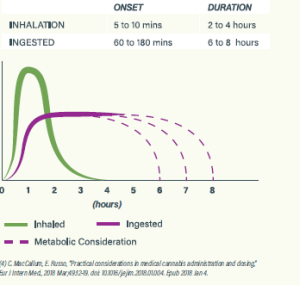
By using a combination of inhaled and oral cannabis optimum pain management can be achieved.
Tolerance breaks
To reduce the likelihood of developing tolerance and needing progressively higher dose, it is recommended that you stop using cannabis for at least 2 consecutive days per month. That resets your cannabis receptors, enabling you to benefit from the same dose long term. It will also confirm if you have achieved a ‘reset’ or if need to keep taking it.
Additionally, IBD patients have reported a cannabis-mediated improvement in diarrhoea and abdominal pain/discomfort in several studies:
https://karger.com/mca/article/4/2/97/820118/Cannabis-and-Cannabis-Derivatives-for-Abdominal
For further information and guidance on the best use of cannabis to help you with pain management reach out to me via the contact page.